
Slipped Disc Treatment in Edinburgh
Active X Clinics provides non-surgical treatment and rehabilitation for slipped discs, also known as prolapsed, herniated or bulging discs, at 10 Atholl Place in Edinburgh's West End. Our osteopaths and physiotherapists, led by Clinic Director Gavin Routledge, combine hands-on treatment with a structured rehab plan to ease your pain, settle leg symptoms and get you moving with confidence again.
What is a slipped disc?
A slipped disc is when part of the soft centre of a spinal disc bulges or pushes out through its tougher outer layer. Despite the name, the disc does not actually slip out of place.
Your discs sit between the bones of your spine and act as shock absorbers. When one bulges, it can irritate or press on a nearby nerve, which is why a slipped disc in the lower back often causes pain down the leg. The terms slipped, prolapsed, herniated and bulging disc are often used for the same problem, and it is most common in the lower back.
It is also worth knowing that disc bulges show up on scans of many people who have no back pain at all. That is why we focus on how you are moving and coping day to day, not just on what a scan shows.
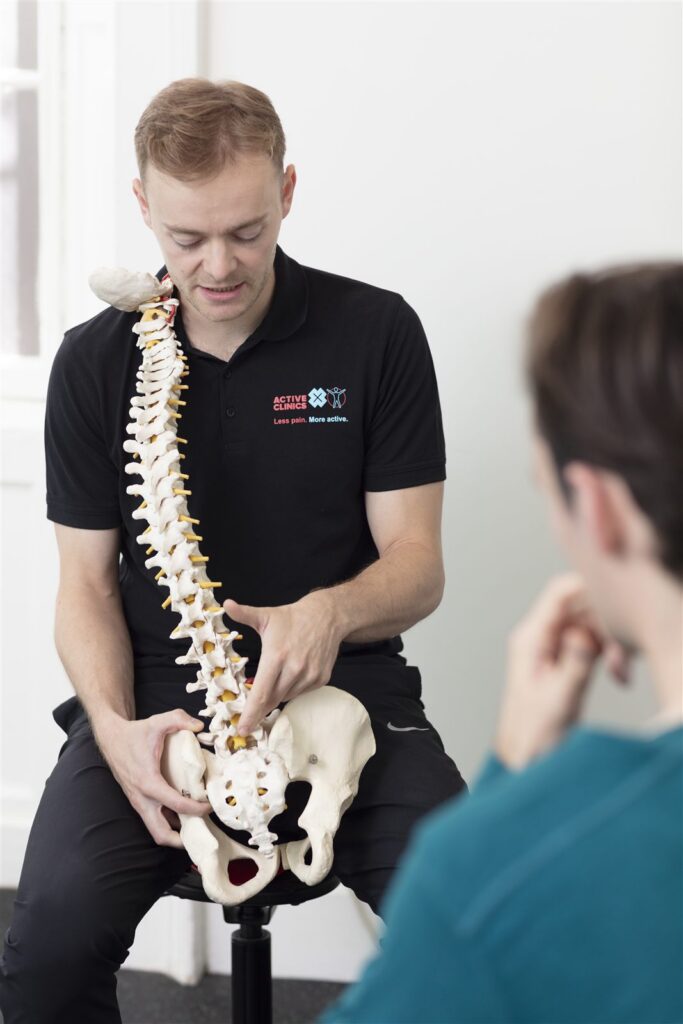
There are really 3 degrees of severity
An annular strain
The annulus is the tough outer fibrous layer of the disc. You can tear it without a bulge happening. Think of this as a grade 1 disc problem.
A herniation
If enough of the fibres tear then - due to the internal pressure - the disc bulges through the tear. A grade 2 disc problem.
A prolapse
If more fibres tear then some of the nuclear, soft centre squirts out through the tear. Think of this as a grade 3 disc problem.
What are the symptoms of a slipped disc?
The most common sign of a slipped disc in the lower back is pain that travels from the back or buttock down one leg. The specific disc affected will determine which nerves are affected, and this determines where in your leg the symptoms will be, because each lumbar spinal nerve supplies a specific part of your leg. The sciatic nerve covers the buttock, back and outside of the thigh, and most of your lower leg and foot (aside from a thin strip down the front of the lower leg). Symptoms can include:
When to get urgent help
Call 999 or go to A&E straight away if you have back pain along with numbness around your genitals or buttocks, new difficulty peeing, loss of bladder or bowel control, or numbness or weakness in both legs. These can be signs of a rare but serious condition called cauda equina syndrome, which needs emergency treatment. In 35+ years of practice we have seen around 10 patients with cauda equina.
Do you need surgery for a slipped disc?
Most people with a slipped disc do not need surgery. Symptoms often settle with time, speeded up with the right rehabilitation, and the bulging part of the disc can shrink over the following weeks and months.
Surgery can be the right choice for some people, for example when leg weakness is getting worse or pain is not improving despite good rehab. If you are weighing up surgery, we can help you understand your options and work alongside your GP or surgeon. For more on this, listen to Gavin's podcast interview with Edinburgh neurosurgeon Mr Ioannis Fouyas, Should I have lumbar spinal surgery?
How we treat a slipped disc at Active X
Our treatment has two aims: to ease your pain as quickly as we can, then to rebuild your back's strength so you can trust it again.
Your first appointment
Every new patient starts with a Functional Assessment. We go through your history, check for anything that needs a doctor/surgeon, and test how you move to find out what eases and aggravates your symptoms. You leave with a clear explanation of what is going on and a plan for how we'll help you rehab fully.
Hands-on treatment
Our osteopaths and physiotherapists use gentle hands-on techniques to ease pain and help you move more freely, especially in the early stages when everything feels sore and guarded.
Rehabilitation and strength
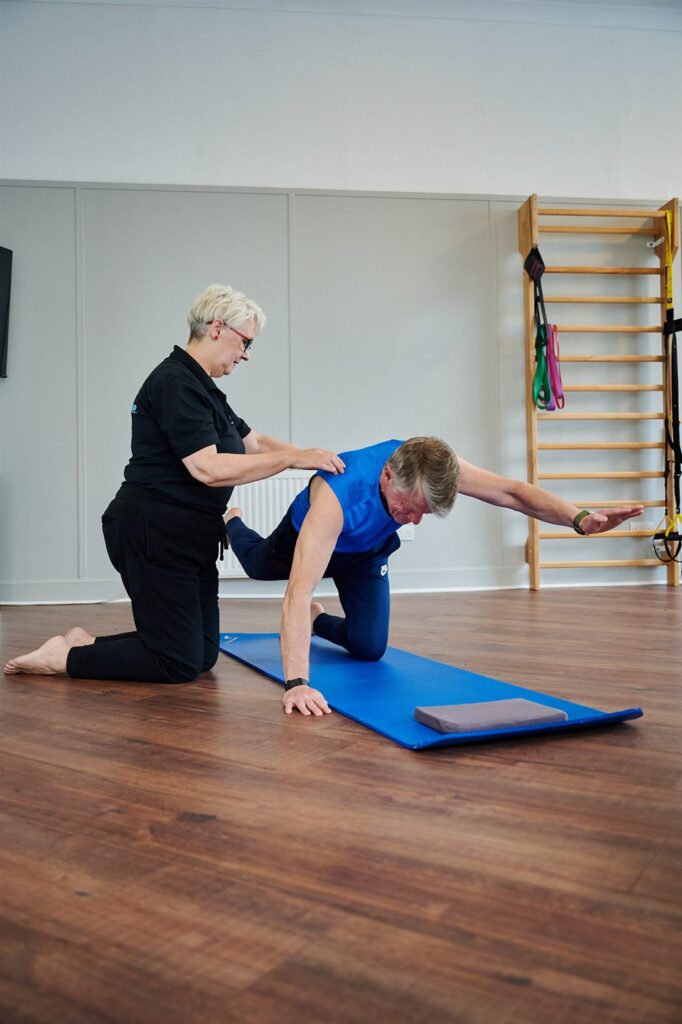
Staying active is one of the most important parts of recovery. We guide you through graded exercises that build up gradually, then progress you towards proper strengthening work. Read more in our guide to whether strength training is good for lower back pain.
Help with everyday life
A slipped disc can make simple tasks hard. We give you practical advice on sitting, sleeping and getting around, and our free guides cover walking with sciatica, climbing stairs with back pain and putting your socks on.
Why choose Active X for slipped disc treatment in Edinburgh?
Active X has focused on lower back pain and sciatica since 1993, and disc problems are a large part of what we see.
Getting to our Edinburgh clinic
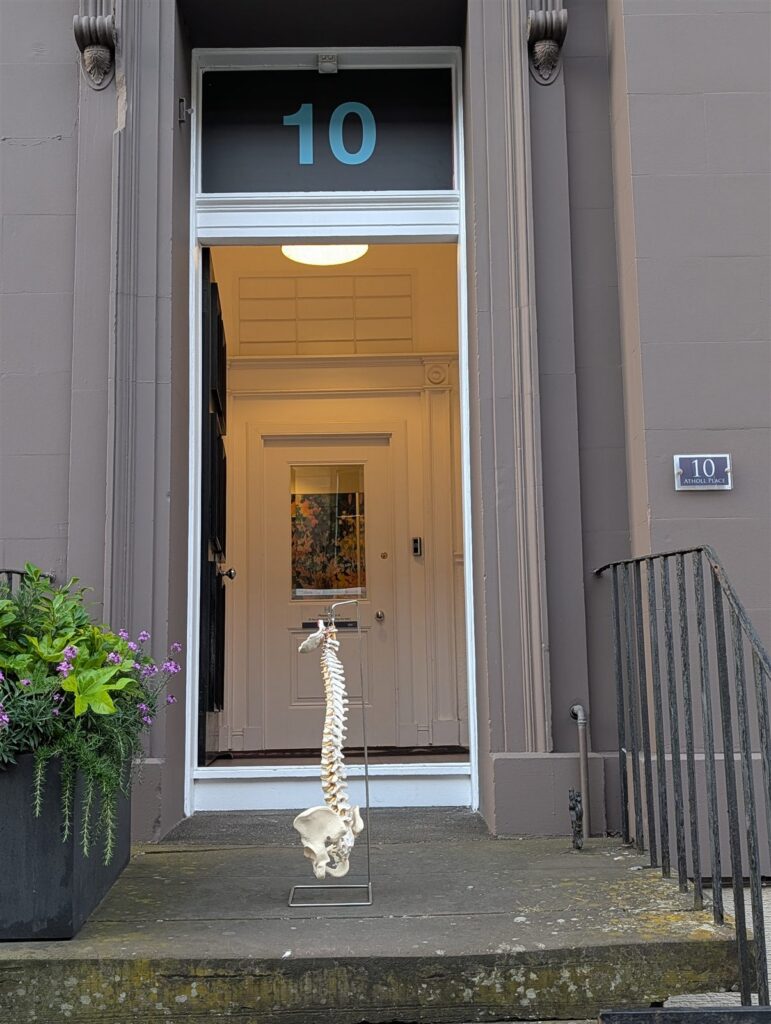
Our clinic is at 10 Atholl Place, Edinburgh EH3 8HP, in the West End. It is a short walk from Haymarket station and the West End tram stop, and close to bus routes along West Maitland Street. If you are coming from East Lothian, you can also see us at Fletcher's Cottage Spa, Archerfield, Dirleton EH39 5HU.
Slipped disc FAQs
How long does a slipped disc take to heal?
It varies from person to person. Many people find their symptoms ease over a few weeks to a few months, although leg symptoms such as tingling can take longer to settle fully. A clear rehab plan helps you stay active safely while your back recovers.
Should I rest with a slipped disc?
Short periods of rest can help when pain is at its worst, but long spells of bed rest are not recommended. Keeping as active as your pain allows usually helps recovery, and we can show you how to do that without making things worse.
Is it a slipped disc or sciatica?
Sciatica describes pain, tingling or numbness along the sciatic nerve down the leg, rather than its cause - it's really a description rather than a diagnosis. A slipped disc pressing on a nerve root is one of the most common causes, but not the only one. Your Functional Assessment helps work out what is behind your symptoms.
Do I need an MRI scan before treatment?
Most people do not need a scan to start treatment. We assess you in clinic and will recommend you see your GP or a specialist if anything suggests you need further tests. We can also refer you directly for an MRI if that will help inform your recovery.
Can an osteopath or physiotherapist help with a slipped disc?
Yes. UK guidelines recommend exercise as a core part of managing low back pain and sciatica, with hands-on therapy used alongside it. Our osteopaths and physiotherapists provide both, tailored to how your symptoms behave.
Do I need a GP referral?
No. You can book an appointment with us directly online or by calling the clinic.


Book slipped disc treatment in Edinburgh
If a slipped disc is stopping you from sitting, sleeping or moving the way you want to, our team can help. Book your first appointment online or call us on 0131 221 1415.