
Yes. For many people, strength training for lower back pain can be a helpful part of managing persistent or recurring lower back pain. Research shows that exercise, including resistance training, can improve pain and function in chronic lower back pain. Started at the right level and built up gradually, it can help you feel stronger, more confident and less worried about your back.
Struggling with back pain that keeps coming back? Book an appointment with one of our physiotherapists or osteopaths in Edinburgh.
Watch the full episode of our podcast below, where Gavin Routledge, osteopath and founder of Active X Clinics, explains why he recommends strength training for back pain and sciatica.
Why does back pain keep coming back?
Many people get treatment for back pain, feel better, then find themselves back where they started weeks or months later. After 35 years of treating lower back pain and sciatica, I have come to believe that getting out of pain and staying out of pain are two very different challenges.
I think of it as a cliff edge. Treatment can help you climb back onto the clifftop (a Reliever). But if you return to the same habits, the same physical capacity and the same fears, you are still standing right on the edge, and the next time life gives you a shove (a trigger), over you go. I know this from experience, having had seven years of back pain and sciatica myself in my twenties.
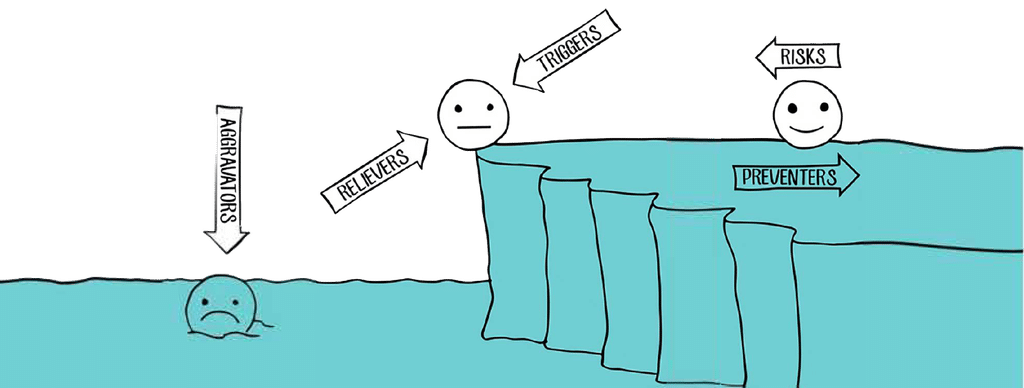
Not every episode of back pain can be prevented. But it makes sense to look at what you can do to stay comfortably back from that edge, and strength training has an important role to play (a Preventer).
What does the research say about strength training for lower back pain?
A 2021 Cochrane review, which looked at research involving more than 24,000 people with chronic lower back pain, found that exercise can produce meaningful improvements in pain. Systematic reviews focusing on resistance training, using body weight, bands, kettlebells or other weights, suggest it can improve both pain and function. There is also evidence that exercise, especially when combined with education, may reduce the risk of future episodes.
That does not mean strength training is the only useful option. Walking, swimming, Pilates and yoga can all help, and no single type of exercise is best for everyone. But strength training has some particularly useful qualities.
How does strength training help lower back pain?
Pain is more complicated than tissue damage alone. It is also influenced by movement, stress, mood, attention and how sensitive your nervous system has become. I explain this in more detail in how pain works: the pain equation. Strength training can influence several of these factors at once.
1. It changes what your body can do
Everyday tasks like gardening, carrying shopping or lifting a grandchild place demands on your body. If you build strength and endurance, those same tasks become a smaller challenge relative to what you can do. This matters more as we get older, because we naturally lose muscle and strength unless we work to keep it.
2. It changes what you believe your body can do
After a bad episode, it is natural to become wary of bending or lifting. But if caution turns into long-term avoidance, you lose confidence and capacity, and those movements start to feel more threatening. By starting with a simple, manageable movement and gradually building on it, you collect evidence that your back is more robust than you thought. Psychologists call this graded exposure. I call the result body trust.
3. It may change how your body processes pain
Exercise can temporarily reduce sensitivity to pain for many people, through systems in the brain and spinal cord that help regulate pain. Regular exercise can also support better sleep and mood, which both affect how pain feels. This response varies from person to person, which is why the right starting point matters.
Is strength training safe with back pain?
For most people with persistent or recurring back pain, strength training is safe when it is pitched at the right level and progressed sensibly. You do not necessarily have to wait until you are completely pain-free before you start. For many people, graded movement is part of recovery itself.
However, the starting point needs to suit your symptoms. Someone with worsening sciatica or nerve symptoms needs a different approach from someone with a mild, recurring backache. If you have sciatica, it is worth having an assessment before you begin.
How to start strength training with back pain
Many people tell me they have tried back exercises before and they did not work. Often the exercises were too hard, too easy, never progressed, or simply never became a habit. These three rules help:
- Use it or lose it, but don’t abuse it. Challenge your body appropriately rather than punishing it.
- Start low and build slow. Find a level you can manage, repeat it and build gradually. This is a marathon, not a sprint, and progress may need to be slower as we get older.
- Keep the end in mind. The goal is not a heavier kettlebell for its own sake. It is getting back to golf, gardening, travel or whatever matters to you.
Consistency matters more than the exact format. That might mean a few minutes of movement during the day, a short daily routine, or two or three strength sessions a week. If you would like help getting started, our physiotherapists can put together a strength programme that suits your back and your goals.
When should you get your back checked first?
Seek urgent medical help if back pain comes with numbness around your genitals or bottom, new problems controlling your bladder or bowel, sciatica in both legs, or weakness that is getting worse. Otherwise, an assessment can help you understand what is going on and where to start safely.
How Active X can help
At Active X Clinics in Edinburgh and North Berwick, our osteopaths and physiotherapists help people with back pain and sciatica. Our back pain treatment starts with a thorough assessment to understand your problem, ease your symptoms and agree a plan. Once things settle, we focus on rebuilding strength, movement and confidence, so you can stay further back from the edge.
For those who want ongoing support, Momentum offers a structured way to maintain your strength and mobility over the long term.
Frequently asked questions
Can strength training make back pain worse?
It can if you start too hard or progress too quickly. Starting at a manageable level and building gradually, with guidance where needed, helps keep any flare-ups small and manageable.
What strength exercises are good for lower back pain?
There is no single best exercise. Many people start with simple movements such as hip hinges and build up to lifting light weights or kettlebells. The right exercises depend on your symptoms, fitness and goals.
Do I need to be pain-free before I start?
Not necessarily. For many people, appropriately graded movement is part of recovery. Your starting point should reflect your symptoms, so get assessed first if you have significant or worsening nerve pain.
How often should I do strength training for my back?
Two or three sessions a week works well for many people, but a short daily routine can be just as useful. The best plan is one you can stick to and gradually build on.
If you are in or around Edinburgh or East Lothian and want help building a back you can trust, book an initial consultation with our team. You can also listen to more episodes on our podcast or read more about Gavin Routledge.