Back Pain Treatment Edinburgh
Back Pain Treatment Clinic In Edinburgh
At Active X Backs we specialise in back pain. Widely regarded as the best clinic for back pain treatment in Edinburgh, we have helped thousands of people reduce their pain, and improve their movement!
How common is back pain?
Back pain is very common – it’s one of the 3 most common reasons that people consult their doctor. And lower back pain affects 80% of the adult population at some time in their lives. It’s sometimes referred to as “lumbago”, which doesn’t really mean anything other than “you have low back pain”.
Do you have a sore back? If you don’t, you will know many people who have this problem, whether that be lower, mid, or upper back pain. It almost seems that we humans have a design flaw, doesn’t it? With so many people suffering, it’s hard to believe that there isn’t a fundamental problem with the way we evolved into an upright posture.
The spine is complex but robust
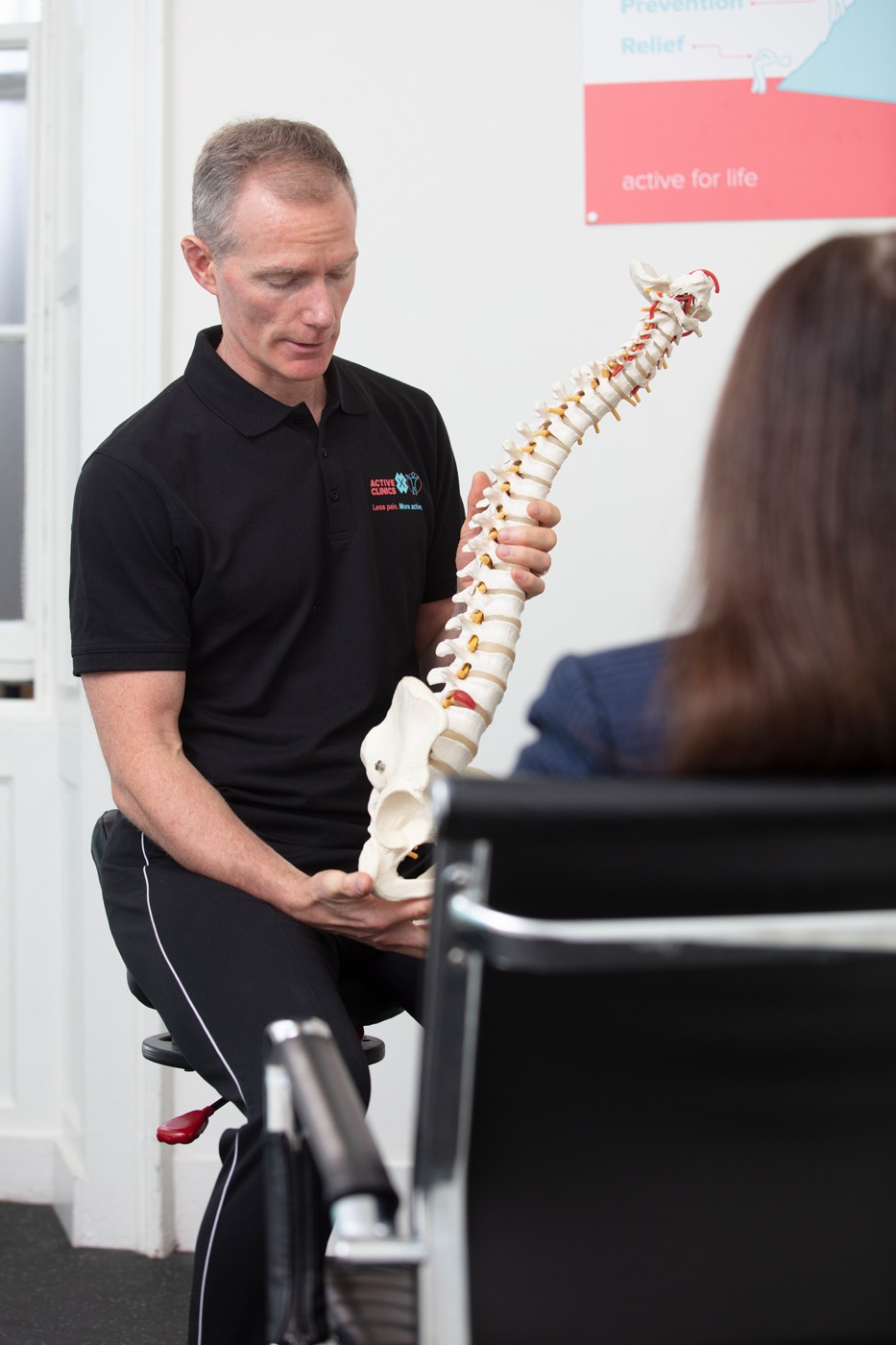
The human spine consists of 24 vertebrae. As children we have more bones (33), but the lower few fuse together so that as an adult you have just the 24. The coccyx – often thought of as your tail-bone – is made up of 4 tiny childhood bones fusing together, and the sacrum is made of of 5 fusing together.
Despite how common back pain is, the spine is a fairly robust structure. It protects the spinal cord and nerves and serves as attachment for 40 individual muscles. These muscles control the position (posture) and movement of the spine. It is widely believed that a lot of back pain is related to muscular dysfunction (see more below).
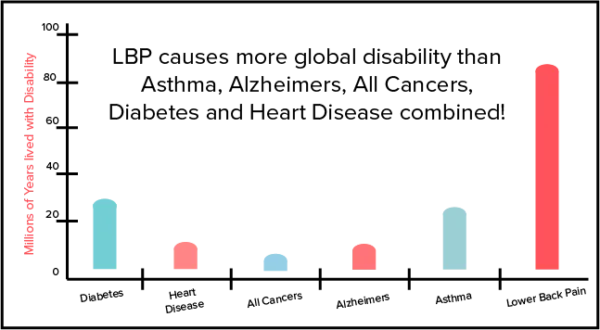
Isn’t back pain a minor complaint?
Back pain relief – top tips
Stay active
If you have an aching back, it’s really important to remain as active as the pain permits. The rules are slightly different, depending on how long you’ve had your pain.
Should you use painkillers?
The recommendations on this are changing. Non-steroidal anti-inflammatories are often prescribed. But there’s recent evidence they may prolong pain, and healing time. Codeine is sometimes prescribed. But opioids can cause dependency, and are considered unhelpful for long-term pain. The can cause more problems than they solve.
Back Pain Treatment
There is evidence that osteopathy, chiropractic, physiotherapy and massage are helpful. (If you’re looking for an emergency osteopath in Edinburgh, you’ve found one. We will answer the phone 24/7/365.
What causes it?
It’s important that you exclude possible disease processes. These are rarely the cause. But pain can be caused by underlying disease. And a back pain specialist can work out the probability for you by combining your history (what you tell us), with examination findings. At Active X we start to do that before we even see you, by sending you a link to an online form, as soon as you book your appointment. The form includes questions to help determine whether you have an increased likelihood of spinal pathology.
“Non-specific back pain”
Often, it’s difficult to identify the cause. Doctors frequently label this “non-specific back pain”. For sufferers, it’s one of the most frustrating aspects to having a sore back – everyone has a different explanation. If you consult two different clinicians about the same problem, they will almost certainly give different diagnoses. As commented above, muscular tension and joint strain are often assumed to be the cause.
Back Pain Diagnosis versus Functional Assessment
At Active X we provide a Functional Assessment for low back pain. While we help you understand the likely causes, it’s arguably more important for you to know what to do to get better. And what to avoid. This is where the Functional Assessment comes in. We will provide a FA at your first appointment. And if it’s appropriate, you’ll leave with details on which exercises will relieve your pain.
Back pain – prevention
We have more to say on this than we can fit into a short article, but the below tips are tried and tested – and based on the scientific evidence.
- Moving often helps to prevent all types of pain. Don’t stay still longer than you have to.
- Try to manage the loads you place on your back. If you suddenly increase the amount of load on your back, that’s a good way to injure yourself.
- Avoid static postures like sitting or standing for long periods. This is related to the first point above.
- Stress is really bad for increasing the risk of long-term pain too. Try to find stress-relieving tactics.
- Have a supportive mattress. But make sure it’s not too hard for you either.
- Having achieved relief of their back pain, many of our clients opt for a plan for prevention. This means we identify your personal risk factors and you decide which of those you’d like to work on. We will then support you in making those changes. Coaching you to a better, stronger back.
When to see a doctor for your back pain
If you answer “Yes”, we recommend you see a clinician specialising in this area:
Active X has specialised in relief AND prevention since 1993. Our team, based in the West End of Edinburgh are keen to help you.
Secure your appointment today, by clicking one of the links below.
- Compared with during your waking day, is your pain worse when trying to sleep?
- Have you been diagnosed with Cancer at any time?
- Do you have any numbness (lack of sensation) or pins and needles in your pelvic floor area (up between your upper thighs, the area you would sit on if on a saddle)?
- Do you have any difficulty urinating or defecating (using the toilet)?
- Have you been on a prolonged course of oral corticosteroids (steroids by mouth) in the past or now?
- Have you lost any great amount of weight without meaning to over the last year?
- Have you had lower back surgery in the last 2 years?
- Have you had any recent change in sexual function? Loss of feeling, erection or ability to orgasm?
- Have you suffered any significant trauma recently, which in any way could impact on your lower back?
- Have you had a persistent high temperature or chills recently?
Back Pain FAQ’s
HOW TO SLEEP WITH LOWER BACK PAIN?
Sleep in whichever position is most comfortable for your lower back. Make sure you spend time moving around before going to bed (probably best not to slump on the sofa). It may be helpful to take some painkillers before going to bed. Use pillows to support you in bed – sometimes a pillow between your knees helps when lying on your side. A pillow behind the knees may help when lying on your back. Rarely, lying on the front can be more comfortable – especially for those with lumbar disc problems.
HOW TO RELIEVE LOWER BACK PAIN?
How to relieve lower back pain depends on the cause. If your pain is worse when sitting, then it will often feel better walking around, so do this often. If your pain is worse bending forwards, when arching backwards often helps. If your pain is worse bending backwards, then bending forwards may help. Painkillers may help in the short-term. Osteopathy and massage are effective in relieving lower back pain.
WHAT CAUSES LOWER BACK PAIN AND NUMBNESS IN YOUR LEG?
Lumbar disc problems can often cause a combination of lower back pain and numbness in your leg. This is a type of sciatica.d There are other possible causes. It’s best to consult a clinician who specialises in sciatica. There are other possible causes of numbness and they may not be related to your lower back pain.
WHAT CAUSES SUDDEN SHARP PAIN IN THE LOWER BACK?
There are a number of possible causes of sharp pain in the lower back. A common one is muscle spasm. If your pain is triggered by an everyday activity which you’ve done many times without pain in the past, then it’s likely that you haven’t done any serious damage – the pain is simply due to muscle spasm. This is your body’s way of preventing you from doing the same movement again. Although the pain can be severe, it doesn’t represent a serious problem.
WHAT IS THE BEST MEDICINE FOR LOWER BACK PAIN?
The best medicine for lower back pain depends on the cause of your pain. The clinical guidelines have recently moved away from paracetamol. They recommend non-steroidal anti-inflammatories (such as ibuprofen) and if that doesn’t help (or you can’t take them), then to try a weak opioid. However, opioids should not be used for more than a few days without consulting your doctor.
You would be better to consult an osteopath specialising in lower back pain; as there is good evidence that manual therapy helps.
CAN ANXIETY CAUSE LOWER BACK PAIN?
Anxiety can certainly increase pain. It is unlikely to be the only cause of a first-time lower back pain. In someone who has had prolonged lower back pain, or many bouts of it, anxiety can trigger an episode of lower back pain. This is due to the functioning of the Central Nervous System. Your brain can effectively “learn” pain, which can then be “turned on” by anxiety.
OSTEOPATHY FOR SPORTS INJURIES IN THE OVER 50S
Just because you’re over 50 doesn’t mean you can’t participate in sport. At Active X, we treat lots of veteran sports people – from competitive athletes to the weekend warrior.
IS CYCLING GOOD FOR LOWER BACK PAIN?
IS SWIMMING GOOD FOR LOWER BACK PAIN?
If you can swim without aggravating your lower back pain, then swim. If swimming aggravates your pain, then it’s best to avoid swimming. You may find that you’re OK with crawl, but breaststroke isn’t good – so, stick with crawl. Often walking in the water is more comfortable and useful exercise without the awkward swimming position. And the water helps to support your weight, taking the strain off your lower back.
If it’s painful to swim, don’t do it.
IS EXERCISE BAD FOR LOWER BACK PAIN?
No. Generally exercise is really good for lower back pain. Which exercise depends on the type of lower back problem you have. Broadly, stick to the first rule, which is “Use it or Lose it, But Don’t Abuse it”. So, any movement that you can do that doesn’t hurt is a good thing. The second rule is “Start Low and Build Slow” (SLABS), which means start at an easy , pain free level and slowly build it up.
WHAT CAN CAUSE LOWER BACK PAIN IN A WOMAN?
Women have all the same problems as men with lower back pain. But they can also suffer lower back pain related to being a woman. Menstrual cramps, endometriosis, ovulation pain, pregnancy, delivery pain, prolapsed womb and/or vagina.
WHO SHOULD I SEE FOR BACK PAIN? AN OSTEOPATH, CHIROPRACTOR, OR PHYSIOTHERAPIST?
All of these professionals are qualified to deal with back pain. It’s always good to get a personal recommendation. Failing that, it’s difficult to recommend one over another. This is because there’s a lot of diversity within each profession. But broadly, chiropractors do more manipulation, and physios give more exercises and lifestyle advice, and osteopaths are somewhere in the middle in their approach to back pain.
SHOULD I SEE AN OSTEOPATH FOR BACK PAIN?
Osteopaths are recommended for back pain. The NHS, large healthcare organisations, and other companies employ osteopaths to help people with back pain.
A number of studies have shown the benefits of osteopathy, and so osteopaths are included in the UK clinical guidelines for the management of back pain. Osteopathy is a statutorily regulated profession in the UK, ensuring that high standards of practice are maintained. Osteopaths will take a thorough case history related to your pain, examine you, provide an evaluation of what’s causing your pain, use manual techniques to relieve your pain, and give you advice on how to relieve your own back pain.
ExcellentBased on 135 reviews Trustindex verifies that the original source of the review is Google.
 John Cooper2024-02-13Had lower back pain and after a couple of sessions with Gavin the relief is fanastic and movement in hips is great,highly recommendedTrustindex verifies that the original source of the review is Google.Tom Ord2024-01-29Having recently moved to Edinburgh and with a long history of back issues, it was important for me to source a decent osteopath. Active X have been superb. As an electrician I can’t afford any downtime, and on 2 occasions they’ve sorted my back without me missing any work days. Absolute professionals. Thankyou.Trustindex verifies that the original source of the review is Google.P Scott2024-01-25Excellent treatment, support and guidance to sort out lower back pain. App has insightful and educational information to treat and, when I get there, prevent it happening again. A real sense of shift in my behaviours as a result of the sessions with Gavin.Trustindex verifies that the original source of the review is Google.Rachel Brown2024-01-10I’m really impressed with the service and treatment, after a really annoying sore back and leg which appeared over Christmas. Casper has really helped to give me treatment and exercises which has eased the pain, not only that he is also a real pleasure to deal with and has a great manner, which has put me immediately at ease and makes me feel like I’m in safe hands!! Keep up the great work.Trustindex verifies that the original source of the review is Google.Renata Gorska2023-12-28I wanted to express my sincere gratitude for the exeptional care and treatment I received from Caspar. His professionalism, friendliness, patientce, and dedication made me feel comfortable and confident right from the start. The treatment I received was truly outstanding and has made a significant difference in my condition. I am very grateful for the improvement I have experienced under Caspar's care. Thank you very much Caspar 🙂Trustindex verifies that the original source of the review is Google.Emma Smyth2023-12-13After years of struggling i have finally found someone who actually listens and actively makes an effort to correct what i need. Couldnt recommend enough. Great people, service, and results.Trustindex verifies that the original source of the review is Google.Steven Tindale2023-11-23Not for the first time Active X have put me back on my feet. Jordan was first class in sorting out the problem. I can't recommend him highly enough.Trustindex verifies that the original source of the review is Google.skynia tre2023-11-09Professional serviceTrustindex verifies that the original source of the review is Google.Jacq Coghill2023-10-25Just had second appointment with Gavin for upper back pain. Thorough examination and history taken. Great explanation and understanding of what’s happening and tips to alleviate the problem. Today was really interesting with gentle manipulation of joints and stretching of muscles involved. Hopeful this can be resolved.



