
Sciatica Treatment in Edinburgh
Specialist Sciatica Treatment Edinburgh
Our aim at Active X is to provide you with relief from pain as quickly as possible. We have been delivering effective sciatica treatment in Edinburgh for a long time, so are well placed to help you.
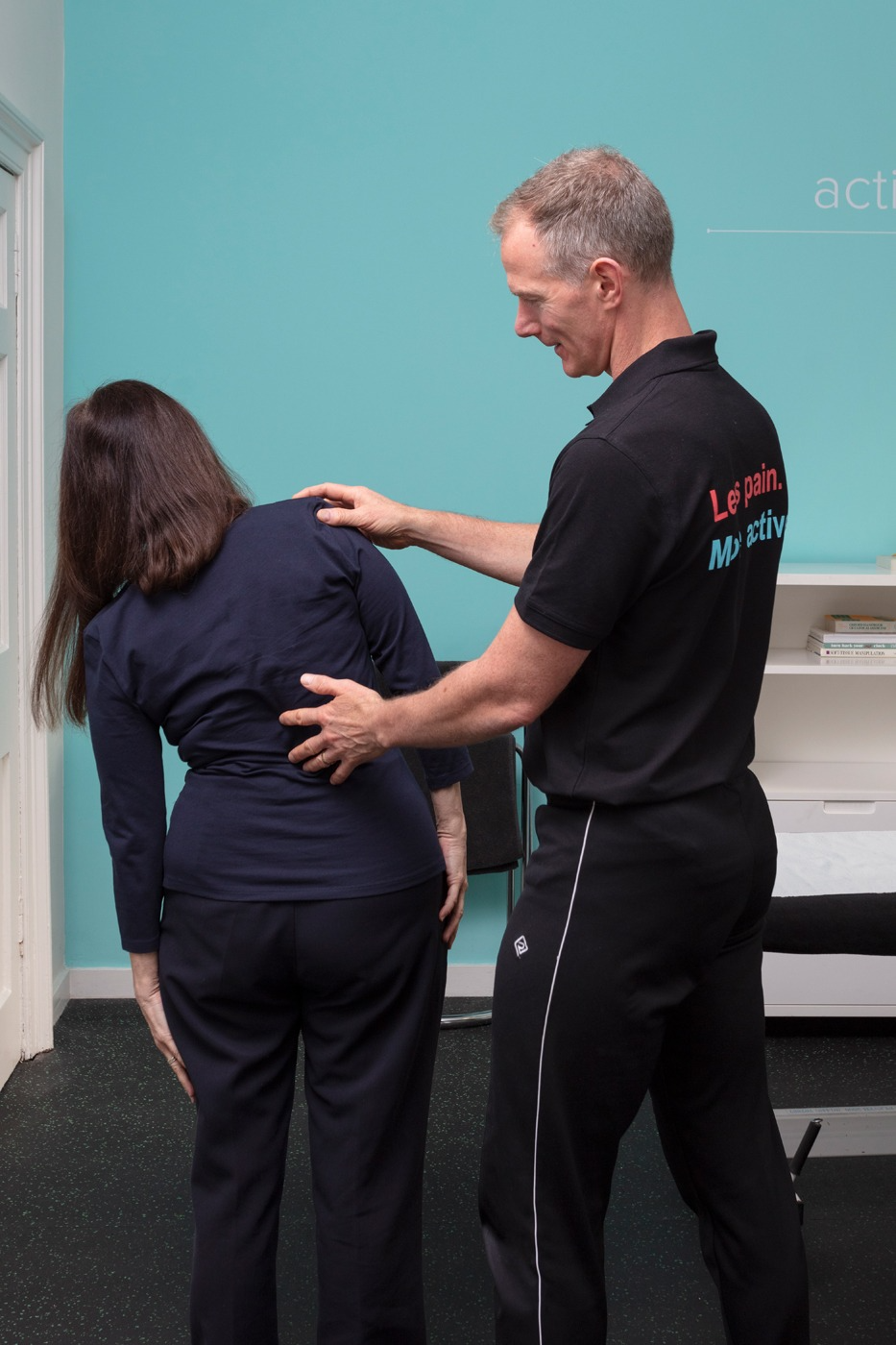
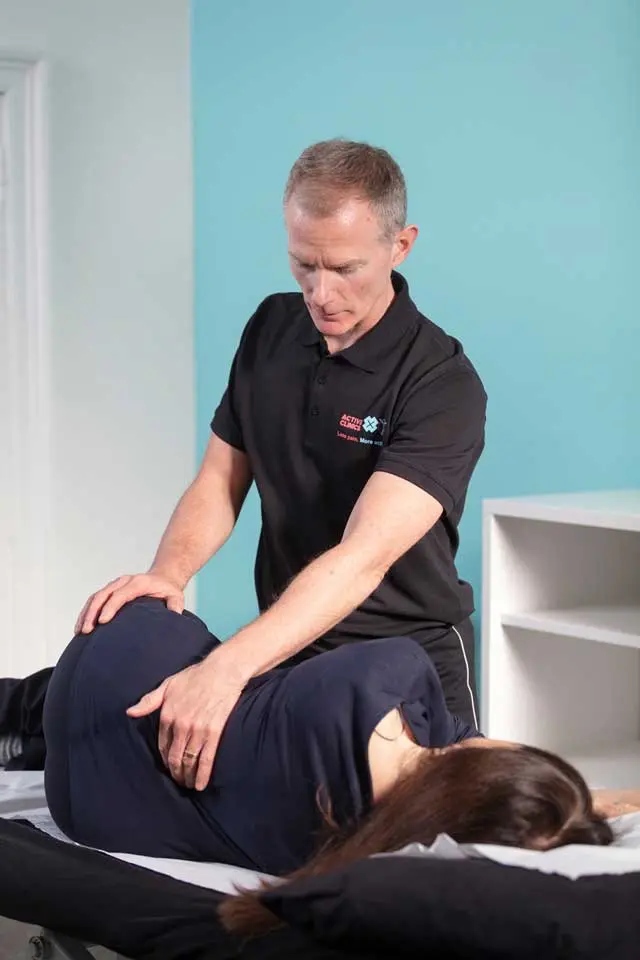
How common is sciatica?
Sciatica affects about around 1 in 4 people at some time in their lives. It’s more common in the over 40s. Have you been affected? If you haven’t, you probably know someone who has.
What is Sciatica?
“Sciatica” is a description. And not a diagnosis. It describes where your symptoms are. But not what’s causing them.
It’s like going to the doctor and telling them you have a sore head, and them telling you that you have a headache.
Basically, sciatica is pain and/or pins and needles in the distribution of the sciatic nerve. You may also have weakness in one of the muscles supplied by the nerve.
The sciatic nerve covers from the buttock, through the back and outside of the thigh, and everything below the knee.
Different types of sciatica
Due to underlying disease
This is very rare. See the screening questions below to find out whether you should see a doctor or not for sciatica.
Non-nerve compression sciatica
We often refer to this as “referred pain”. You can experience pain in the sciatic area if a muscle/ligament/joint in your lower back is hurting. This is because it has a common spinal nerve. So, let’s say you’ve strained a muscle in your back. The nerve supplying that muscle has a tributary from the L5 spinal nerve. But L5 spinal nerve also supplies a tributary to the sciatic nerve. So, you feel pain in the sciatic area, but there’s nothing wrong there.
Nerve compression sciatica
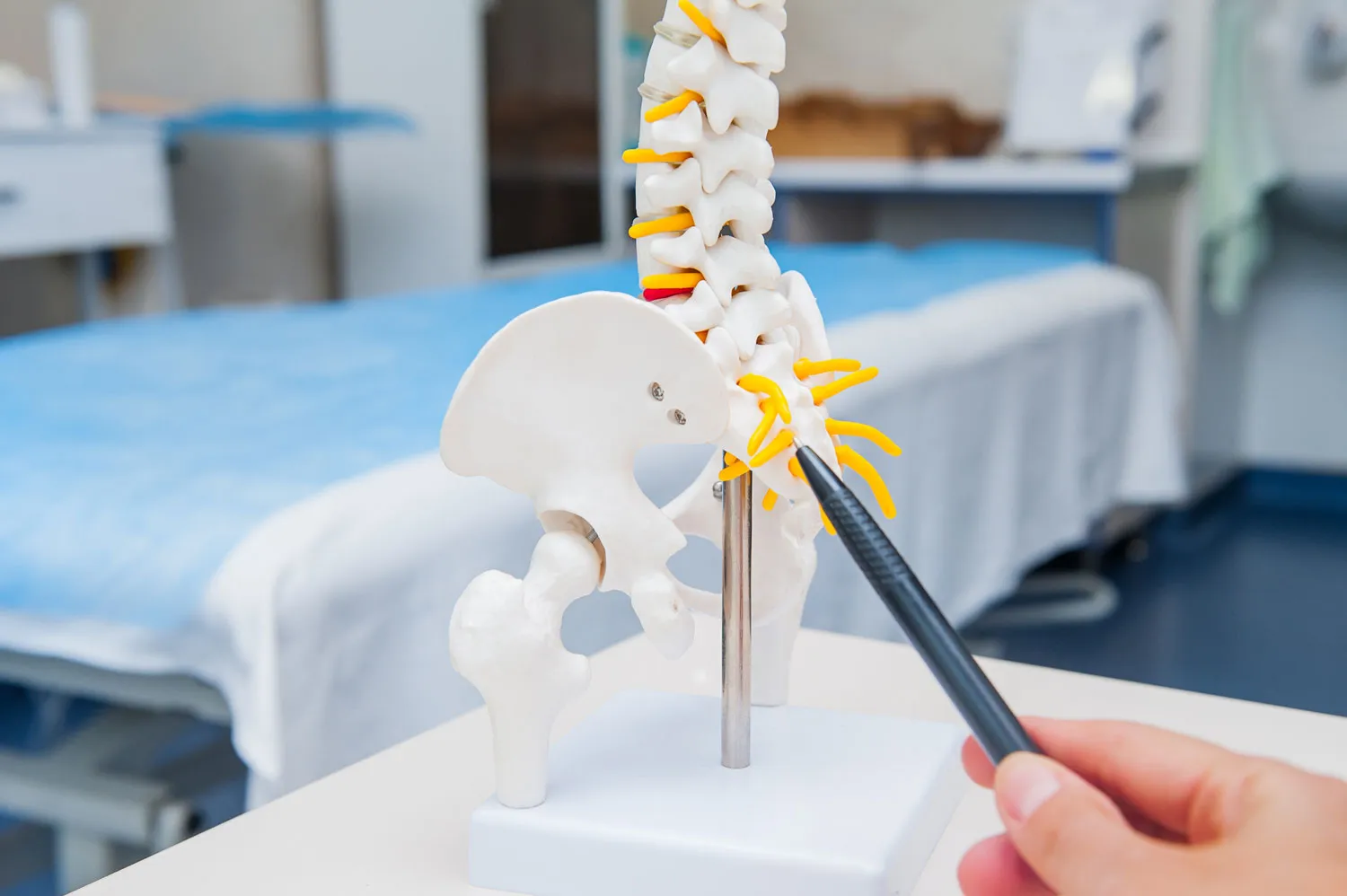
Where the nerve or one of its tributaries is compressed/irritated. This is fairly common. And the most common cause of this is a disc prolapse/herniation. We specialise in the non-surgical rehabilitation of people with disc prolapses and herniations.
What causes sciatica?
There are a number of risk factors for sciatica. If you have a history of recurrent low back pain, you’re more at risk. People who are significantly overweight are more prone to sciatica.
If you’re over 40, guess what? You have a greater risk of sciatica. And if you smoke, that increases your risk too – strange one. We think it’s because you are slower to heal if you smoke. It affects the “quality of your tissues”.
People who sit for long periods and those who do heavy manual work are both at more risk of sciatica.
Sciatica relief
Stay active
It’s really important to remain as active as the pain permits. The rules are slightly different, depending on how long you’ve had your pain.
Sciatica Treatment
There is evidence that osteopathy, chiropractic, physiotherapy and massage are helpful.
TENS
Transcutaneous Electroneural Stimulation might help ease the symptoms. This is a little battery driven pack that is often given to labouring women. If you’re interested in trying this, we sell TENS units in the clinic. They are only £40.
Use painkillers for sciatica relief?
The recommendations on this are changing. Non-steroidal anti-inflammatories are often prescribed. But there’s recent evidence they may prolong pain. Codeine is sometimes prescribed. But opioids can cause dependency. There are other drugs that your doctor may prescribe for nerve pain.
Immediate relief for sciatica pain
Our aim at Active X is to provide you with rapid relief. And to help you reduce the risk of another episode. Relief is not enough. More than 90% of our clients opt for prevention as well as relief of their sciatica.

Sciatica Diagnosis Versus Functional Assessment
At Active X we provide a Functional Assessment. While we help you understand the likely causes, it’s important for you to know what to do to get better. And what to avoid. This is where the Functional Assessment comes in. We will provide a FA at your first appointment.
Sciatica treatment near me
If you’ve googled “sciatica treatment near me”, you’re obviously keen to get rapid relief of your pain. Just click the “Book Now” button, and you’re on your way. We specialise in sciatica and low back pain.
Video about sciatica
Please excuse the very old video below. It may be old, but the information is as true now as it was then.
When to see a doctor for your sciatica
If you answer “Yes”, we recommend you see a clinician specialising in this area:
Active X has specialised in relief AND prevention since 1993. Our team, based in the West End of Edinburgh are keen to help you.
Secure your appointment today, by clicking one of the links below.
- Compared with during your waking day, is your pain worse when trying to sleep?
- Have you been diagnosed with Cancer at any time?
- Do you have any numbness (lack of sensation) or pins and needles in your pelvic floor area (up between your upper thighs, the area you would sit on if on a saddle)?
- Do you have any difficulty urinating or defecating (using the toilet)?
- Have you been on a prolonged course of oral corticosteroids (steroids by mouth) in the past or now?
- Have you lost any great amount of weight without meaning to over the last year?
- Have you had lower back surgery in the last 2 years?
- Have you had any recent change in sexual function? Loss of feeling, erection or ability to orgasm?
- Have you suffered any significant trauma recently, which in any way could impact on your lower back?
- Have you had a persistent high temperature or chills recently?
Sciatica FAQ’s
WHAT IS SCIATICA PAIN?
Sciatica is not a diagnosis. It’s a description. Sciatica is pain felt in the distribution of your sciatic nerve, which travels from the buttock down the outside and back of thigh, as well as supplying sensation to most of your lower leg and foot. There are broadly 3 types of sciatica pain: sciatica due to to more “medical problems” (very rare); sciatica due to nerve entrapment (most commonly lumbar disc prolapse); and sciatica due to referred pain. Sciatica pain may be accompanied by tingling or numbness.
HOW TO RELIEVE SCIATICA PAIN
Relieving sciatica pain depends on the cause. It’s important to work out which movements aggravate the pain. Often moving in the opposite direction will relieve the pain. Again, depending on the cause, walking often helps to relieve sciatica pain. Painkillers may or may not help, depending on the cause. Osteopathy can help to relieve sciatica.
WHAT CAUSES SCIATICA BUTTOCK PAIN?
The buttock is the most common place to feel sciatica. Sciatica buttock pain – without thigh or lower leg pain – is less likely to be due to nerve entrapment. And more likely due to referred pain. Referred pain is when you feel pain in one place but it’s due to injury/irritation to a different area (commonly the lower back with sciatica).
CAN SCIATICA CAUSE GROIN PAIN?
The sciatic nerve does not supply the groin. Therefore, pain in the groin will not be due to sciatic nerve irritation. This area is supplied by the obturator nerve, which originates from spinal levels L2, L3 and L4. Groin pain may be due to local muscular/tendon strain or hip joint problems, or referred pain from other areas, such as sacro-iliac joint problems.
WHAT ARE SCIATICA SYMPTOMS?
Sciatica symptoms can include pain, tingling, pins and needles, numbness, feelings of running water, cramping muscles, twitching and weakness in the leg. The severity is usually dependent on the cause of the sciatica. Referred pain is not usually as severe as when a nerve is irritated or directly compressed. This can result in severe pain – like a line of pain following the nerve.
HOW LONG DOES SCIATICA LAST?
Sciatica can resolve in days, or last many weeks or months. It depends on the cause and how you manage that cause. Sciatica due to lumbar disc prolapse can take 3-6 months to resolve. Sciatica due to local muscular strain is likely to resolve in 2-3 weeks.
WHAT IS THE BEST TREATMENT FOR SCIATICA?
The best treatment for sciatica is to treat the cause. This is best done by consulting a clinician specialising in the diagnosis and management of sciatica. Osteopathy has been shown to be effective in helping with sciatica. Minimising activities which aggravate your sciatica is often important – especially with acute sciatica. If your sciatica is due to disc prolapse, some people benefit from surgical intervention.
HOW DOES AN OSTEOPATH HELP WITH SCIATICA?
An osteopath will diagnose the cause of your sciatica. This may involve various medical tests as well as a full osteopathic assessment, during which the osteopath will encourage you to tell the full story of your sciatica. The osteopath will then provide treatment to alleviate your sciatica, and give you advice on how to avoid aggravating your sciatica and advice on how to help the cause to heal. This may involve exercises as well as general lifestyle advice.
ExcellentBased on 135 reviews Trustindex verifies that the original source of the review is Google.
 John Cooper2024-02-13Had lower back pain and after a couple of sessions with Gavin the relief is fanastic and movement in hips is great,highly recommendedTrustindex verifies that the original source of the review is Google.Tom Ord2024-01-29Having recently moved to Edinburgh and with a long history of back issues, it was important for me to source a decent osteopath. Active X have been superb. As an electrician I can’t afford any downtime, and on 2 occasions they’ve sorted my back without me missing any work days. Absolute professionals. Thankyou.Trustindex verifies that the original source of the review is Google.P Scott2024-01-25Excellent treatment, support and guidance to sort out lower back pain. App has insightful and educational information to treat and, when I get there, prevent it happening again. A real sense of shift in my behaviours as a result of the sessions with Gavin.Trustindex verifies that the original source of the review is Google.Rachel Brown2024-01-10I’m really impressed with the service and treatment, after a really annoying sore back and leg which appeared over Christmas. Casper has really helped to give me treatment and exercises which has eased the pain, not only that he is also a real pleasure to deal with and has a great manner, which has put me immediately at ease and makes me feel like I’m in safe hands!! Keep up the great work.Trustindex verifies that the original source of the review is Google.Renata Gorska2023-12-28I wanted to express my sincere gratitude for the exeptional care and treatment I received from Caspar. His professionalism, friendliness, patientce, and dedication made me feel comfortable and confident right from the start. The treatment I received was truly outstanding and has made a significant difference in my condition. I am very grateful for the improvement I have experienced under Caspar's care. Thank you very much Caspar 🙂Trustindex verifies that the original source of the review is Google.Emma Smyth2023-12-13After years of struggling i have finally found someone who actually listens and actively makes an effort to correct what i need. Couldnt recommend enough. Great people, service, and results.Trustindex verifies that the original source of the review is Google.Steven Tindale2023-11-23Not for the first time Active X have put me back on my feet. Jordan was first class in sorting out the problem. I can't recommend him highly enough.Trustindex verifies that the original source of the review is Google.skynia tre2023-11-09Professional serviceTrustindex verifies that the original source of the review is Google.Jacq Coghill2023-10-25Just had second appointment with Gavin for upper back pain. Thorough examination and history taken. Great explanation and understanding of what’s happening and tips to alleviate the problem. Today was really interesting with gentle manipulation of joints and stretching of muscles involved. Hopeful this can be resolved.



